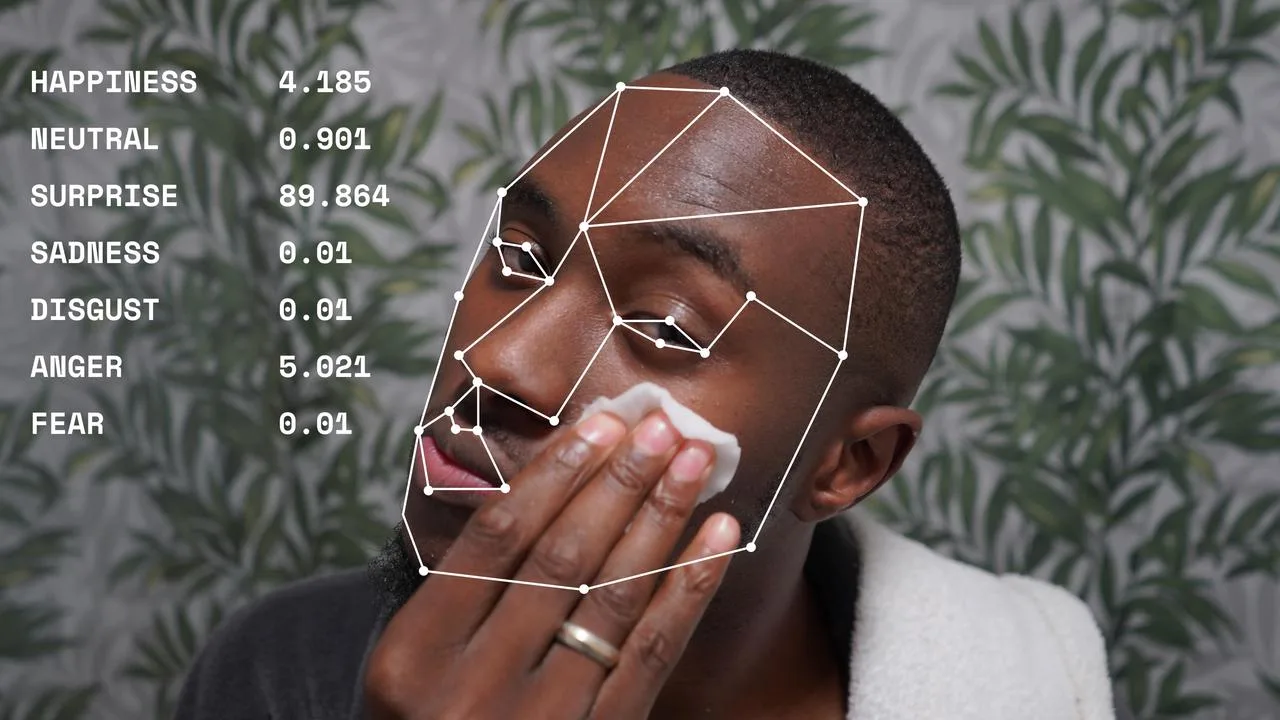
As artificial intelligence continues to develop and influence different aspects of our lives, its role in education is becoming increasingly important. One particularly controversial implementation of AI is affect or emotion recognition, which claims to interpret human emotions and mental states by analysing facial expressions, body language, and speech patterns. Advocates for affect recognition argue that incorporating it into education can transform how students learn, enabling personalised and adaptive teaching methods. However, the reliability and ethical implications of this technology make it well worth further investigation.
What is Affect Recognition?
Affect recognition, also known as emotion recognition, is a subfield of AI that aims to identify and interpret human emotions and mental states by analysing various cues, such as facial expressions, body language, and speech patterns. By leveraging machine learning algorithms and computer vision techniques, affect recognition systems attempt to classify emotions into categories such as happiness, sadness, anger, fear, surprise, and disgust.
The origins of affect recognition can be traced back to the early studies on facial expressions and emotions conducted by psychologist Paul Ekman in the 1960s. Ekman's work led to the development of the Facial Action Coding System (FACS) and the theory that certain facial expressions are universally linked to specific emotions. This notion has been the foundation for much of the affect recognition research that has since taken place.
Several technologies and developers have already attempted to incorporate affect recognition:
- Affectiva: A software company that has developed an emotion recognition platform using computer vision and deep learning algorithms to analyse facial expressions in real-time, with applications in marketing, automotive, and gaming industries. Affectiva's partners include BMW, Boeing, and Lockheed Martin.
- Emotient: Acquired by Apple in 2016, Emotient's technology used machine learning to analyse facial expressions in images and videos, for advertising purposes.
- Beyond Verbal: This company focuses on emotion recognition through vocal intonations, focusing on customer service interactions, telemedicine, and voice assistants.
The controversy surrounding affect recognition primarily stems from the reliability and validity of the underlying theory. Critics argue that emotions are not universally expressed through facial expressions, as cultural and individual differences can heavily influence the way emotions are displayed. Recent studies have challenged the idea that specific facial expressions can be reliably linked to distinct emotions, suggesting that context plays a crucial role in interpreting emotional cues.
Another concern is the potential for bias in affect recognition algorithms, as they may not account for variations in facial structure, skin tone, neurodiversity, or cultural background. These biases can lead to misinterpretation and misclassification of emotions, raising ethical questions about the fair application of this technology.
Case Study: Microsoft's Decision to Remove Emotion Recognition Services
Given the problematic nature of emotion recognition research, Microsoft decided to remove certain features from their Azure Face service, including capabilities that infer emotional states, gender, age, smile, facial hair, hair, and makeup.
In a 2022 blog post, Microsoft acknowledged the need for AI systems to be trustworthy and appropriate solutions to the problems they are designed to solve. In the case of emotion recognition, the company highlighted several concerns:
- Lack of scientific consensus: Experts both inside and outside the company pointed out the absence of a universally accepted definition of "emotions". This lack of consensus makes it challenging to develop reliable and accurate emotion recognition systems.
- Generalisation challenges: Emotion recognition technology faces difficulties in generalising its inferences across diverse use cases, regions, and demographics. This could result in misinterpretations or biases.
- Heightened privacy concerns: The use of AI to analyse facial expressions and infer emotional states raises significant privacy concerns.
Microsoft's decision demonstrates some of the biggest concerns with affect recognition technologies. Deploying technologies which do not have a solid theoretical underpinning and which may seriously impact people's lives is clearly unethical. However, despite moves from big companies like Microsoft and IBM, the lure of emotion recognition continues to draw developers to produce products for education.
Affect in Education
Here are some examples of how affect and emotion recognition is being pursued in education:
- BrainCo: BrainCo has developed a headband called Focus1 which uses electroencephalography (EEG) technology to monitor students' brainwaves and assess their attention levels in real-time.
- Carnegie Mellon University's ArticuLab: The ArticuLab has developed an AI-powered virtual tutor called Alex, designed to recognise and respond to students' emotions using natural language processing and facial expression analysis.
- The Affective Computing Group at MIT Media Lab: The group has been conducting research on emotion recognition and its potential applications in various fields, including education.
Teaching AI Ethics
Activity 1: AI Ethics Debate Divide students into small groups, and assign each group a specific subject area. In their groups, students research and discuss the potential benefits and drawbacks of implementing affect recognition technology. Each group presents their findings and engages in a class-wide debate.
Activity 2: AI Ethics Case Study Analysis Provide students with several case studies that highlight the use of affect recognition technology in different subject areas. In pairs or small groups, students analyse their assigned case study, focusing on the purpose and application, potential benefits and drawbacks, and ethical considerations.
Activity 3: Designing an Ethical Affect Recognition System Divide students into small groups. Their task is to create a system that addresses the ethical concerns related to affect recognition, such as privacy, accuracy, and bias. As a class, address: Is it possible to develop a truly ethical affect recognition system?